Ngân sách xây dựng
Loại : ngân sách
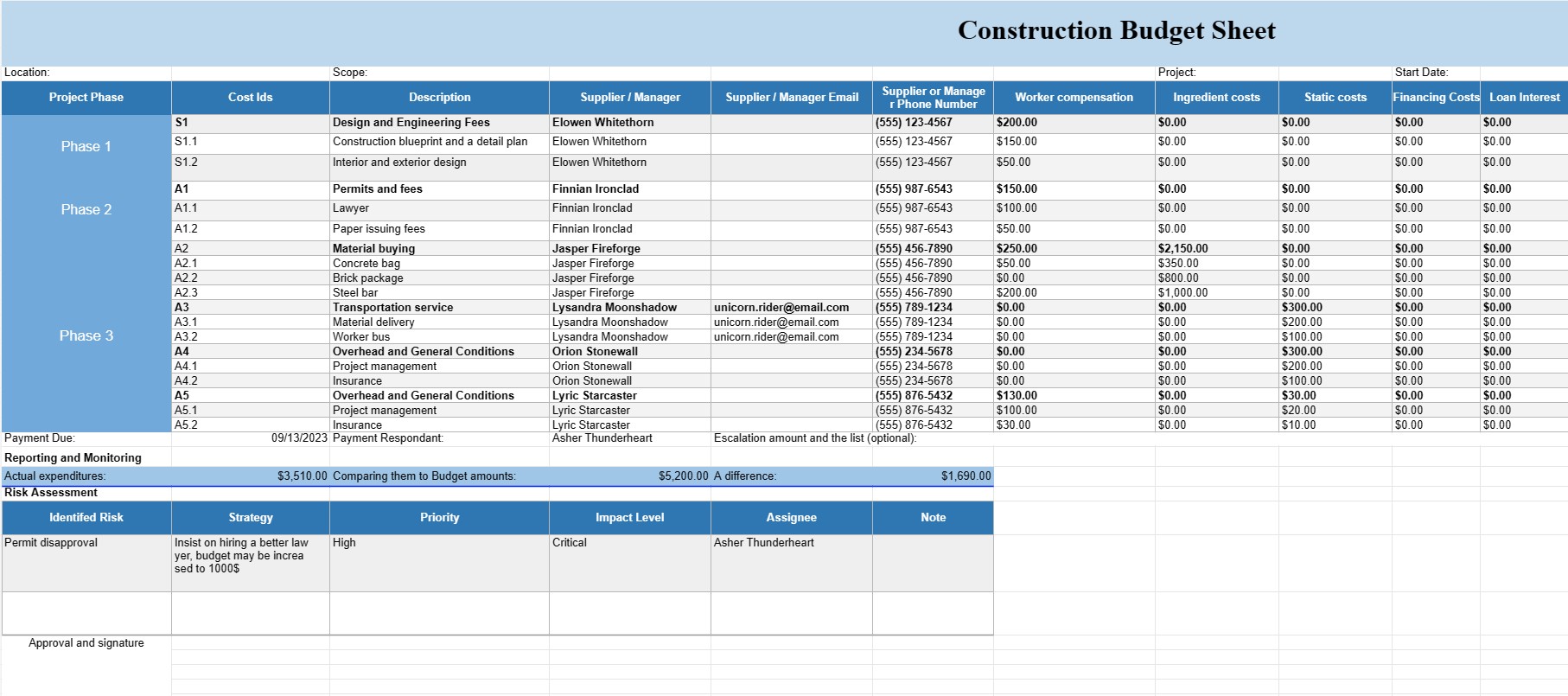
Bạn dự định xây dựng một ngôi nhà hoặc một cơ sở hạ tầng? Vui lòng sử dụng cái này để quản lý chi phí và hóa đơn.


Tài liệu ngân sách xây dựng là một kế hoạch tài chính toàn diện nêu rõ chi phí ước tính liên quan đến một dự án xây dựng. Nó phục vụ như một công cụ quan trọng để lập kế hoạch, quản lý và giám sát tất cả các khía cạnh tài chính của dự án, đảm bảo rằng nó nằm trong giới hạn ngân sách. Tài liệu ngân sách xây dựng thường được tạo trong giai đoạn lập kế hoạch của dự án và đóng vai trò là tài liệu tham khảo trong suốt vòng đời của dự án.
Dưới đây là các thành phần chính thường có trong tài liệu ngân sách xây dựng:
- Tổng quan về dự án: Mô tả ngắn gọn về dự án xây dựng, bao gồm mục đích, phạm vi, địa điểm và mọi đặc điểm hoặc yêu cầu riêng.
- Danh mục chi phí: Tài liệu ngân sách chia chi phí thành nhiều loại khác nhau, chẳng hạn như:
- Chi phí xây dựng: Chi phí này bao gồm các chi phí liên quan đến nhân công, vật liệu, thiết bị và nhà thầu phụ cần thiết để hoàn thành việc xây dựng
- Chi phí chuẩn bị mặt bằng: Chi phí dọn dẹp mặt bằng xây dựng, đào, san lấp mặt bằng và bất kỳ cải tạo mặt bằng cần thiết nào.
- Giấy phép và Phí : Chi phí xin giấy phép, giấy phép, kiểm tra và các yêu cầu pháp lý khác.
- Phí thiết kế và kỹ thuật: Chi phí liên quan đến dịch vụ kiến trúc và kỹ thuật, bao gồm cả thiết kế, bản vẽ và tư vấn.
- Dự phòng: Khoản tiền dành riêng cho các chi phí ngoài dự kiến, những thay đổi về quy mô hoặc những thách thức không lường trước được trong quá trình xây dựng.
- Chi phí chung và Điều kiện chung: Chi phí liên quan đến quản lý dự án, bảo hiểm, chi phí văn phòng, tiện ích và các chi phí hành chính khác.
- Chi phí tài chính: Lãi và phí liên quan đến các khoản vay xây dựng hoặc các thỏa thuận tài chính.
- Lợi nhuận và tăng giá: Các nhà xây dựng thường áp dụng tỷ suất lợi nhuận hoặc chênh lệch chi phí xây dựng để tạo ra lợi nhuận từ dự án.
- Ước tính chi phí chi tiết: Phân tích chi phí ước tính trong từng loại chi phí, cung cấp danh sách chi phí được chia thành từng khoản. Điều này có thể bao gồm tỷ lệ nhân công, số lượng và chi phí vật liệu, phí thuê thiết bị, v.v.
- Lịch trình: Dòng thời gian nêu rõ ngày bắt đầu và ngày hoàn thành dự kiến cho các giai đoạn khác nhau của dự án. Lịch trình này giúp quản lý dòng tiền và điều phối các nhiệm vụ.
- Lịch thanh toán: Kế hoạch về thời gian và cách thức thanh toán sẽ được thực hiện cho các nhà thầu, nhà thầu phụ, nhà cung cấp và các bên khác có liên quan đến dự án. Nó thường phù hợp với các mốc quan trọng của dự án.
- Quy trình đặt hàng thay đổi: Bản mô tả quy trình xử lý các lệnh thay đổi, là những sửa đổi đối với phạm vi dự án có thể ảnh hưởng đến chi phí.
- Điều khoản tăng cấp: Một số ngân sách xây dựng bao gồm điều khoản tăng cấp để tính đến khả năng lạm phát hoặc tăng giá trong thời gian xây dựng.
- Báo cáo và giám sát: Một hệ thống theo dõi chi tiêu thực tế và so sánh chúng với số tiền dự toán. Báo cáo tài chính định kỳ giúp người quản lý dự án và các bên liên quan theo dõi tình hình tài chính của dự án.
- Đánh giá rủi ro: Đánh giá các rủi ro tiềm ẩn và sự không chắc chắn có thể ảnh hưởng đến ngân sách của dự án, cùng với các chiến lược giảm thiểu những rủi ro này.
- Phê duyệt và chữ ký: Tài liệu ngân sách thường có khoảng trống để các bên liên quan xem xét, phê duyệt và ký duyệt ngân sách trước khi dự án bắt đầu.
Các tài liệu về ngân sách xây dựng rất quan trọng để đảm bảo rằng một dự án xây dựng có hiệu quả về mặt tài chính, được quản lý tốt và hoàn thành thành công. Chúng mang lại sự minh bạch, giúp ngăn chặn chi phí vượt mức và cho phép lập kế hoạch và kiểm soát tài chính hiệu quả trong suốt vòng đời của dự án.
Dễ dàng xem trước và tải xuống mẫu bảng tính
Xem phiên bản đầy đủ của mẫu bảng tính không có giới hạn để xem nếu bạn thích nó thì bạn có thể tải xuống mẫu excel để lưu trữ trên thiết bị của mình và sử dụng miễn phí.
Truy cập mẫu bảng tính từ mọi nơi
Tính năng này hoạt động trên tất cả các hệ điều hành phổ biến như Windows, MacOS, Linux, iOS. Bạn có thể xem các mẫu bảng tính và tải chúng xuống mà không cần chương trình bổ sung.
Cách sử dụng mẫu
Tìm hiểu cách xem trước, tải xuống và sau đó sử dụng mẫu bảng tính bằng cách làm theo các bước cực kỳ dễ thực hiện
Nhiều mẫu tương tự hơn
Xem thêm các mẫu bảng tính cùng danh mục với mẫu đã chọn.