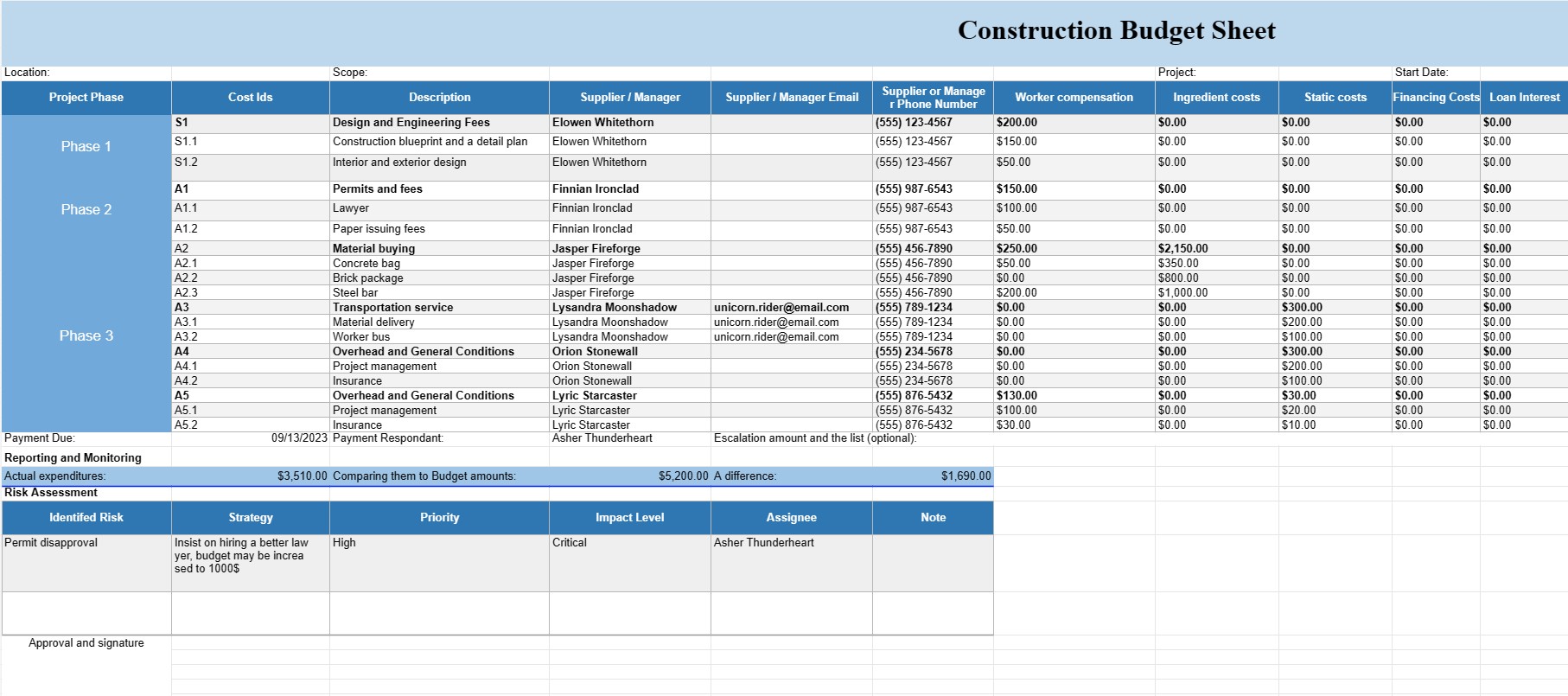
Bugetul de constructii
Categorie : Bugetele
Ai plănuit să construiești o casă sau o infrastructură? Simțiți-vă liber să îl utilizați pentru a gestiona costurile și facturile.


Un document de buget de construcție este un plan financiar cuprinzător care prezintă costurile estimate asociate unui proiect de construcție. Acesta servește ca un instrument crucial pentru planificarea, gestionarea și monitorizarea tuturor aspectelor financiare ale proiectului, asigurându-se că acesta rămâne în limitele constrângerilor bugetare. Documentul bugetului de construcție este de obicei creat în timpul fazei de planificare a proiectului și servește ca referință pe tot parcursul ciclului de viață al proiectului.
Iată componentele cheie incluse în mod obișnuit într-un document de buget de construcție:
- Prezentarea generală a proiectului: O scurtă descriere a proiectului de construcție, inclusiv scopul, domeniul de aplicare, locația acestuia și orice caracteristici sau cerințe unice.
- Categorii de costuri: Documentul bugetar defalcă costurile în diferite categorii, cum ar fi:
- Costuri de construcție: acestea includ costurile legate de forța de muncă, materialele, echipamentele și subcontractanții necesari pentru finalizarea construcției. lucrări.
- Costuri de pregătire a șantierului: Cheltuieli pentru curățarea șantierului, excavare, nivelare și orice îmbunătățiri necesare șantierului.
- Permise și taxe : Costul obținerii de permise, licențe, inspecții și alte cerințe de reglementare.
- Taxe de proiectare și inginerie: Cheltuieli legate de serviciile de arhitectură și inginerie, inclusiv proiectare, desene și consultări.
- Contingence: o sumă rezervată pentru costuri neașteptate, modificări ale domeniului de aplicare sau provocări neprevăzute în timpul construcției.
- Gaze generale și Condiții generale: costuri asociate cu managementul proiectului, asigurări, cheltuieli de birou, utilități și alte cheltuieli administrative.
- Costuri de finanțare: dobânzi și comisioane asociate împrumuturilor pentru construcții sau aranjamente de finanțare.
- Profit și markup: Constructorii includ de obicei o marjă de profit sau o majorare pentru costurile de construcție pentru a genera un profit din proiect.
- Estimări detaliate ale costurilor: o defalcare a costurilor estimate în cadrul fiecărei categorii de costuri, oferind liste detaliate de cheltuieli. Acestea pot include ratele forței de muncă, cantitățile și costurile materialelor, taxele de închiriere a echipamentelor și multe altele.
- Programare: o cronologie care prezintă datele estimate de începere și finalizare pentru diferite faze ale proiectului. Acest program ajută la gestionarea fluxului de numerar și la coordonarea sarcinilor.
- Programa de plată: un plan pentru când și cum vor fi efectuate plățile către contractori, subcontractanți, furnizori și alte părți implicate în proiectul. Adesea, se aliniază cu etapele de referință ale proiectului.
- Proceduri de modificare a comenzilor: o descriere a procesului de gestionare a comenzilor de modificare, care sunt modificări ale domeniului de aplicare al proiectului care pot afecta costurile.
- Clauză de escaladare: unele bugete de construcție includ o clauză de escaladare pentru a ține cont de potențiala inflație sau de creșterea prețurilor în timpul perioadei de construcție.
- Raportare și monitorizare: Un sistem de urmărire a cheltuielilor reale și de comparare a acestora cu sumele bugetate. Rapoartele financiare regulate ajută managerii de proiect și părțile interesate să monitorizeze sănătatea financiară a proiectului.
- Evaluarea riscurilor: o evaluare a riscurilor și incertitudinilor potențiale care ar putea afecta bugetul proiectului, împreună cu strategii de atenuare. aceste riscuri.
- Aprobari și semnături: documentul bugetar include adesea spații pentru ca părțile interesate relevante să revizuiască, să aprobe și să semneze bugetul înainte de începerea proiectului.
Documentele bugetului de construcție sunt esențiale pentru a se asigura că un proiect de construcție este viabil financiar, bine gestionat și finalizat cu succes. Acestea oferă transparență, ajută la prevenirea depășirilor de costuri și permit o planificare și un control financiar eficient pe tot parcursul ciclului de viață al proiectului.
Previzualizare ușoară și descărcare șablon de foaie de calcul
Vizualizați versiunea completă a unui șablon de foaie de calcul fără limitări pentru a vedea dacă vă place, apoi puteți descărca șablonul Excel pentru a-l stoca pe dispozitiv și a-l utiliza gratuit.
Accesați șablonul de foaie de calcul de oriunde
Acesta funcționează pe toate sistemele de operare populare, cum ar fi Windows, MacOS, Linux, iOS. Puteți vedea șabloanele foilor de calcul și le puteți descărca fără programe suplimentare.
Cum se folosește un șablon
Aflați cum să previzualizați, să descărcați și apoi să utilizați șablonul foii de calcul urmând pașii care sunt extrem de ușor de urmat
Mai multe șabloane similare
Vedeți mai multe șabloane de foi de calcul care se află în aceeași categorie cu cel ales.