✕︎
Svenska
فارسی
Italiano
Tiếng Việt
Català
Türk
हिन्दी
Čeština
Lietuvis
Ελληνικά
Dansk
Magyar
Български
Deutsch
Bahasa Melayu
Nederlands
Русский
English
Український
Español
Polskie
ภาษาไทย
Português
ქართველი
Français
Română
한국어
Slovák
繁體中文
日本語
Indonesia
العربية
简体中文
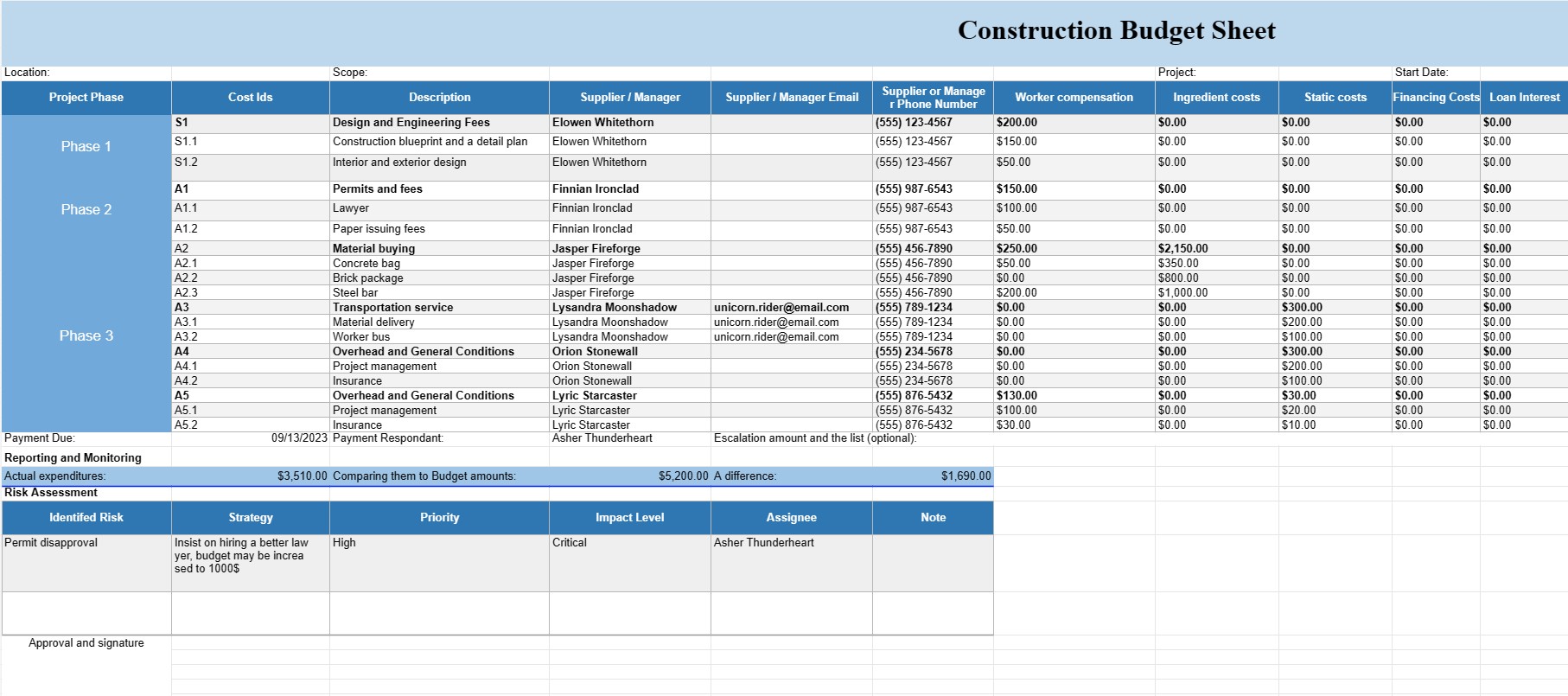
건설예산
범주 : 예산
집이나 기반 시설을 지을 계획이셨습니까? 비용과 인보이스를 관리하기 위해 이것을 자유롭게 사용하십시오.
설명
0

코멘트

646

2

건설 예산 문서는 건설 프로젝트와 관련된 예상 비용을 개략적으로 설명하는 종합 재정 계획입니다. 이는 프로젝트의 모든 재정적 측면을 계획, 관리 및 모니터링하여 예산 제약 내에서 유지되도록 하는 중요한 도구 역할을 합니다. 건설 예산 문서는 일반적으로 프로젝트 계획 단계에서 작성되며 프로젝트 수명주기 전반에 걸쳐 참조 역할을 합니다.
건설 예산 문서에 일반적으로 포함되는 주요 구성 요소는 다음과 같습니다.
- 프로젝트 개요: 목적, 범위, 위치 및 고유한 특성이나 요구 사항을 포함하여 건설 프로젝트에 대한 간략한 설명.
- 비용 범주: 예산 문서는 비용을 다음과 같은 다양한 범주로 분류합니다:
- 건설 비용: 여기에는 건설을 완료하는 데 필요한 인건비, 자재, 장비 및 하청업체와 관련된 비용이 포함됩니다. 작업.
- 현장 준비 비용: 건설 현장 정리, 굴착, 정지 작업 및 필요한 현장 개선 비용.
- 허가 및 수수료 : 허가, 라이센스, 검사 및 기타 규제 요건을 획득하는 데 드는 비용.
- 설계 및 엔지니어링 비용: 설계, 도면 및 협의.
- 우발 상황: 예상치 못한 비용, 범위 변경 또는 건설 중 예상치 못한 문제를 위해 예약된 금액입니다.
- 오버헤드 및 일반 조건: 프로젝트 관리, 보험, 사무실 비용, 공과금 및 기타 관리 비용과 관련된 비용.
- 금융 비용: 건설 대출 또는 관련 이자 및 수수료 자금 조달 조정.
- 이익 및 인상: 건축업자는 일반적으로 프로젝트에서 이익을 창출하기 위해 건설 비용에 이익 마진이나 인상을 포함합니다.
- 자세한 비용 견적: 각 비용 범주 내 예상 비용을 분석하여 항목별 비용 목록을 제공합니다. 여기에는 인건비, 자재 수량 및 비용, 장비 임대 비용 등이 포함될 수 있습니다.
- 일정: 다양한 프로젝트 단계의 예상 시작 및 완료 날짜를 개략적으로 설명하는 타임라인입니다. 이 일정은 현금 흐름을 관리하고 업무를 조정하는 데 도움이 됩니다.
- 지불 일정: 계약자, 하도급자, 공급업체 및 기타 관련 당사자에게 지급 시기와 방법에 대한 계획입니다. 프로젝트. 이는 종종 프로젝트 마일스톤과 일치합니다.
- 변경 주문 절차: 비용에 영향을 미칠 수 있는 프로젝트 범위 수정인 변경 주문을 처리하는 프로세스에 대한 설명입니다.
- 확대 조항: 일부 건설 예산에는 건설 기간 동안 잠재적인 인플레이션이나 가격 인상을 고려하기 위한 확대 조항이 포함되어 있습니다.
- 보고 및 모니터링: 실제 지출을 추적하고 예산 금액과 비교하는 시스템입니다. 정기적인 재무 보고서는 프로젝트 관리자와 이해관계자가 프로젝트의 재무 상태를 모니터링하는 데 도움이 됩니다.
- 위험 평가: 완화 전략과 함께 프로젝트 예산에 영향을 미칠 수 있는 잠재적 위험과 불확실성에 대한 평가입니다. 이러한 위험이 있습니다.
- 승인 및 서명: 예산 문서에는 프로젝트가 시작되기 전에 관련 이해관계자가 예산을 검토, 승인 및 승인할 수 있는 공간이 포함되는 경우가 많습니다.
건설 예산 문서는 건설 프로젝트가 재정적으로 실행 가능하고 잘 관리되며 성공적으로 완료되도록 보장하는 데 중요합니다. 이는 투명성을 제공하고 비용 초과를 방지하며 프로젝트 수명주기 전반에 걸쳐 효과적인 재무 계획 및 제어를 가능하게 합니다.
간편한 미리보기 및 스프레드시트 템플릿 다운로드
제한 없이 스프레드시트 템플릿의 전체 버전을 보고 마음에 드는지 확인한 다음 Excel 템플릿을 다운로드하여 장치에 저장하고 무료로 사용할 수 있습니다.
어디서나 스프레드시트 템플릿에 액세스
이는 Windows, MacOS, Linux, iOS와 같은 널리 사용되는 모든 운영 체제에서 작동합니다. 별도의 프로그램 없이 스프레드시트 템플릿을 확인하고 다운로드할 수 있습니다.
템플릿을 사용하는 방법
따라하기 매우 쉬운 단계에 따라 스프레드시트 템플릿을 미리 보고, 다운로드하고, 사용하는 방법을 알아보세요.
1
송장, 예산, 달력, 기타 플래너 및 기타 추적기와 같은 카테고리를 선택하고 스프레드시트 템플릿을 클릭하여 온라인으로 확인하세요.
2
스프레드시트 템플릿을 미리 본 후 귀하의 목적에 적합하다고 생각되는 템플릿을 다운로드할 수 있습니다
3
한 번 장치에 파일이 있으면 간단히 데이터를 입력하거나 사용 사례에 맞게 수정할 수 있습니다.
4
스프레드시트 템플릿 작업이 완료되면 원하는 방식으로 사용할 수 있습니다.
더 유사한 템플릿
선택한 것과 동일한 카테고리에 있는 더 많은 스프레드시트 템플릿을 확인하세요.