بودجه ساخت و ساز
دسته بندی : بودجه ها
قصد ساختن خانه یا زیرساخت داشتید؟ با خیال راحت از این یکی برای مدیریت هزینه ها و فاکتورها استفاده کنید.


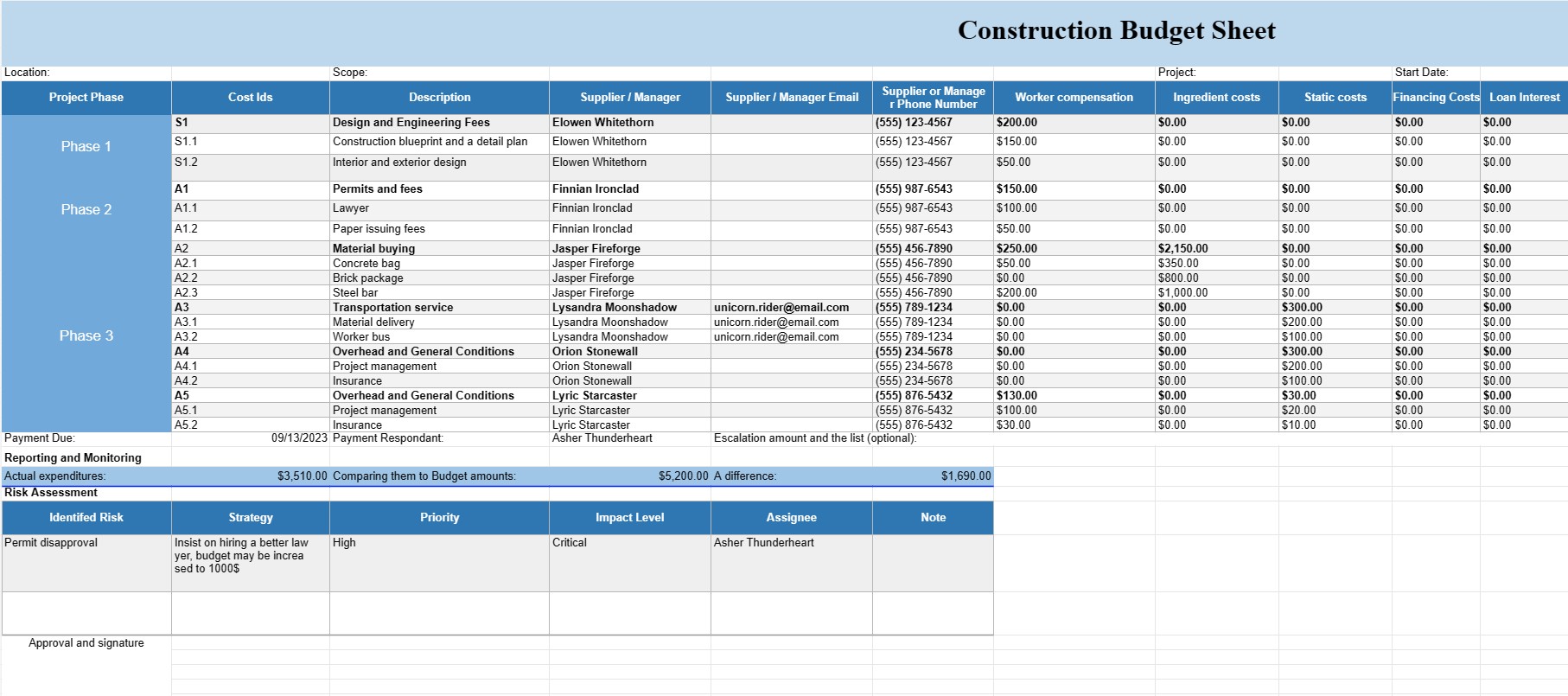
سند بودجه ساخت و ساز یک برنامه مالی جامع است که هزینه های برآورد شده مرتبط با یک پروژه ساخت و ساز را تشریح می کند. این به عنوان یک ابزار حیاتی برای برنامه ریزی، مدیریت و نظارت بر تمام جنبه های مالی پروژه عمل می کند و اطمینان حاصل می کند که در محدودیت های بودجه باقی می ماند. سند بودجه ساخت و ساز معمولاً در مرحله برنامه ریزی پروژه ایجاد می شود و به عنوان یک مرجع در طول چرخه عمر پروژه عمل می کند.
در اینجا اجزای کلیدی که معمولاً در یک سند بودجه ساخت و ساز گنجانده شده است:
- نمای کلی پروژه: شرح مختصری از پروژه ساخت و ساز، از جمله هدف، محدوده، مکان، و هر گونه ویژگی یا الزامات منحصر به فرد آن.
- دستههای هزینه:
- سند بودجه هزینه ها را به دسته های مختلفی تقسیم می کند، مانند:
- هزینه های ساخت و ساز: این شامل هزینه های مربوط به نیروی کار، مواد، تجهیزات و پیمانکاران فرعی مورد نیاز برای تکمیل ساخت و ساز می شود. کار.
- هزینه های آماده سازی سایت: هزینه های پاکسازی محل ساخت و ساز، گودبرداری، درجه بندی، و هرگونه اصلاح لازم در سایت.
- مجوزها و هزینه ها. : هزینه اخذ مجوزها، مجوزها، بازرسی ها و سایر الزامات نظارتی.
- هزینه طراحی و مهندسی: هزینه های مربوط به خدمات معماری و مهندسی، از جمله طراحی، نقشهها و مشاورهها.
- احتیاط: مبلغ رزرو شده برای هزینههای غیرمنتظره، تغییرات در محدوده، یا چالشهای پیشبینی نشده در طول ساختوساز.
- سربار و شرایط عمومی: هزینههای مرتبط با مدیریت پروژه، بیمه، هزینههای اداری، آب و برق و سایر هزینههای اداری.
- هزینههای تامین مالی: بهره و هزینههای مرتبط با وامهای ساخت و ساز یا ترتیبات تامین مالی.
- سود و نشانه گذاری: سازندگان معمولاً حاشیه سود یا نشانه گذاری در هزینه های ساخت و ساز را برای ایجاد سود از پروژه در نظر می گیرند.
- برآورد هزینه تفصیلی: تفکیک هزینههای برآورد شده در هر دسته هزینه، با ارائه فهرستهای جزئی از هزینهها. این میتواند شامل نرخ نیروی کار، مقادیر و هزینههای مواد، هزینههای اجاره تجهیزات و موارد دیگر باشد.
- برنامه: یک جدول زمانی که تاریخهای شروع و تکمیل مورد انتظار برای مراحل مختلف پروژه را مشخص میکند. این برنامه به مدیریت جریان نقدی و هماهنگی وظایف کمک می کند.
- برنامه پرداخت: برنامه ای برای زمان و نحوه پرداخت به پیمانکاران، پیمانکاران فرعی، تامین کنندگان و سایر طرف های درگیر در پروژه. اغلب با نقاط عطف پروژه مطابقت دارد.
- روشهای سفارش تغییر: شرحی از فرآیند رسیدگی به سفارشهای تغییر، که تغییراتی در محدوده پروژه است که میتواند بر هزینهها تأثیر بگذارد.
- بند تشدید: برخی از بودجههای ساخت و ساز شامل یک بند تشدید برای در نظر گرفتن تورم یا افزایش قیمت بالقوه در طول دوره ساختوساز است.
- گزارشدهی و نظارت: سیستمی برای ردیابی هزینه های واقعی و مقایسه آنها با مبالغ بودجه. گزارشهای مالی منظم به مدیران پروژه و ذینفعان کمک میکند تا سلامت مالی پروژه را نظارت کنند.
- ارزیابی ریسک: ارزیابی ریسکها و عدم قطعیتهای بالقوه که میتواند بر بودجه پروژه تأثیر بگذارد، همراه با استراتژیهایی برای کاهش این خطرات.
- تصویب ها و امضاها: سند بودجه اغلب شامل فضاهایی برای ذینفعان مربوطه برای بررسی، تایید و امضای بودجه قبل از شروع پروژه است.
اسناد بودجه ساخت و ساز برای حصول اطمینان از اینکه یک پروژه ساخت و ساز از نظر مالی قابل دوام است، به خوبی مدیریت می شود و با موفقیت تکمیل می شود، بسیار مهم است. آنها شفافیت را ارائه می دهند، به جلوگیری از افزایش هزینه ها کمک می کنند و امکان برنامه ریزی و کنترل مالی موثر را در طول چرخه عمر پروژه فراهم می کنند.
پیش نمایش آسان و دانلود الگوی صفحه گسترده
نسخه کامل یک قالب صفحهگسترده را بدون هیچ محدودیتی مشاهده کنید تا ببینید آیا آن را دوست دارید یا نه، سپس میتوانید الگوی اکسل را برای ذخیره آن در دستگاه خود دانلود کنید و به صورت رایگان از آن استفاده کنید.
دسترسی به الگوی صفحه گسترده از هر کجا
این بر روی تمام سیستم عامل های محبوب مانند Windows، MacOS، Linux، iOS کار می کند. می توانید قالب های صفحه گسترده را ببینید و بدون برنامه های اضافی دانلود کنید.
نحوه استفاده از قالب
نحوه پیشنمایش، دانلود و سپس استفاده از الگوی صفحهگسترده را با دنبال کردن مراحلی که انجام آن بسیار آسان است، بیابید.
الگوهای مشابه بیشتر
الگوهای صفحهگسترده بیشتری را مشاهده کنید که در یک دسته با الگوی انتخابی قرار دارند.