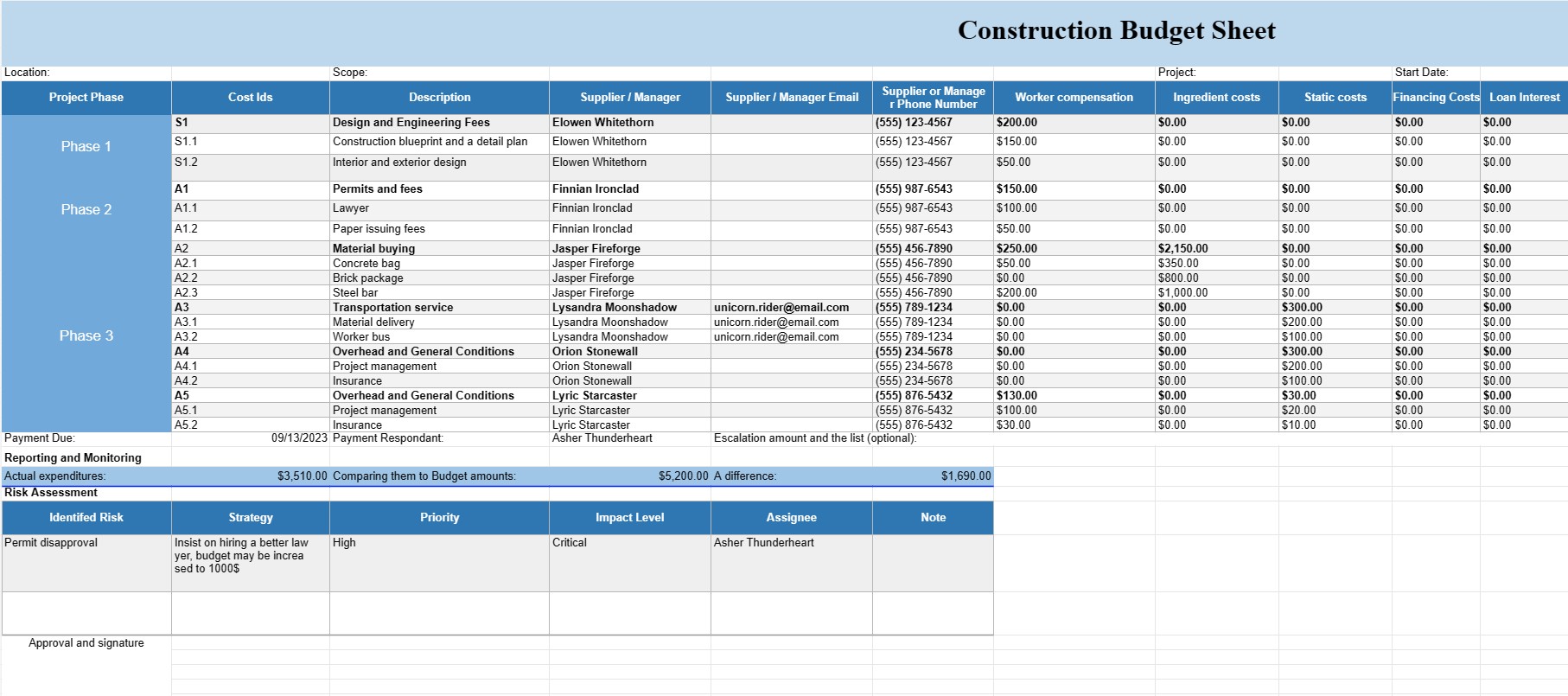
Pressupost de construcció
Categoria : Pressupostos
Tenia previst construir una casa o una infraestructura? No dubteu a utilitzar aquest per gestionar els costos i les factures.


Un document de pressupost de construcció és un pla financer complet que descriu els costos estimats associats a un projecte de construcció. Serveix com una eina crucial per planificar, gestionar i supervisar tots els aspectes financers del projecte, assegurant que es mantingui dins de les limitacions pressupostàries. El document de pressupost de construcció normalment es crea durant la fase de planificació del projecte i serveix com a referència durant tot el cicle de vida del projecte.
Aquests són els components clau que normalment s'inclouen en un document de pressupost de construcció:
- Visió general del projecte: una breu descripció del projecte de construcció, inclòs el seu propòsit, abast, ubicació i qualsevol característiques o requisits únics.
- Categories de costos: El document del pressupost desglossa els costos en diverses categories, com ara:
- Costos de construcció: inclou els costos relacionats amb mà d'obra, materials, equips i subcontractistes necessaris per completar la construcció. treballs.
- Costos de preparació del lloc: Despeses de neteja del lloc de construcció, excavació, rasant i qualsevol millora necessària del lloc.
- Permisos i taxes. : El cost d'obtenir permisos, llicències, inspeccions i altres requisits reglamentaris.
- Taxes de disseny i enginyeria: Despeses relacionades amb serveis d'arquitectura i enginyeria, inclòs el disseny, plànols i consultes.
- Contingència: una quantitat reservada per a costos inesperats, canvis d'abast o reptes imprevistos durant la construcció.
- Despeses generals i Condicions generals: Costos associats a la gestió del projecte, assegurances, despeses d'oficina, serveis públics i altres despeses administratives.
- Costos de finançament: Interessos i comissions associats als préstecs de construcció o acords de finançament.
- Guany i marge: els constructors solen incloure un marge de benefici o un marge de benefici en els costos de construcció per generar beneficis del projecte.
- Estimacions de costos detallades: un desglossament dels costos estimats dins de cada categoria de costos, amb llistes detallades de despeses. Això pot incloure tarifes de mà d'obra, quantitats i costos de material, tarifes de lloguer d'equips i molt més.
- Programació: un calendari que descriu les dates d'inici i finalització previstes per a les diferents fases del projecte. Aquest calendari ajuda a gestionar el flux d'efectiu i a coordinar les tasques.
- Planificació de pagaments: un pla sobre quan i com es faran els pagaments als contractistes, subcontractistes, proveïdors i altres parts implicades en el projecte. Sovint s'alinea amb les fites del projecte.
- Procediments d'ordres de canvi: una descripció del procés per gestionar les ordres de canvi, que són modificacions a l'abast del projecte que poden afectar els costos.
- Clàusula d'escalada: alguns pressupostos de construcció inclouen una clàusula d'escalada per tenir en compte la possible inflació o augments de preus durant el període de construcció.
- Informes i seguiment: Un sistema per fer un seguiment de les despeses reals i comparar-les amb els imports pressupostats. Els informes financers periòdics ajuden els gestors del projecte i les parts interessades a controlar la salut financera del projecte.
- Avaluació de riscos: una avaluació dels possibles riscos i incerteses que podrien afectar el pressupost del projecte, juntament amb estratègies per mitigar-lo. aquests riscos.
- Aprovacions i signatures: el document pressupostari sovint inclou espais perquè les parts interessades rellevants puguin revisar, aprovar i signar el pressupost abans de començar el projecte.
Els documents pressupostaris de construcció són crucials per garantir que un projecte de construcció sigui financerament viable, ben gestionat i finalitzat amb èxit. Ofereixen transparència, ajuden a prevenir els excés de costos i permeten una planificació i un control financers efectius durant tot el cicle de vida del projecte.
Fàcil visualització prèvia i descàrrega de la plantilla de full de càlcul
Vegeu la versió completa d'una plantilla de full de càlcul sense limitacions per veure si us agrada, podeu descarregar la plantilla d'Excel per emmagatzemar-la al vostre dispositiu i utilitzar-la gratuïtament.
Accediu a la plantilla de full de càlcul des de qualsevol lloc
Això funciona en tots els sistemes operatius populars com Windows, MacOS, Linux, iOS. Podeu veure les plantilles de full de càlcul i descarregar-les sense programes addicionals.
Com utilitzar una plantilla
Descobriu com previsualitzar, baixar i utilitzar la plantilla del full de càlcul seguint els passos que són molt fàcils de seguir
Plantilles més semblants
Vegeu més de les plantilles de full de càlcul que es troben a la mateixa categoria que l'escollida.