자산 재고 관리
범주 : 추적기
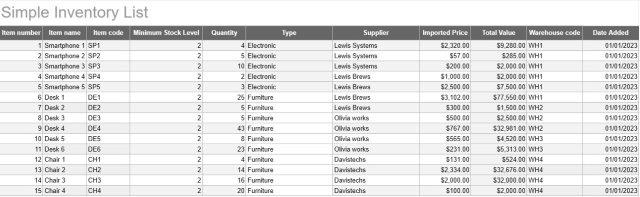
속성을 갖고 관리하고 내부 인벤토리는 처리하기 쉬운 작업이 아닙니다. 이 Excel 템플릿을 사용하여 개체를 구성하는 것이 훨씬 더 쉽다고 생각합니다.


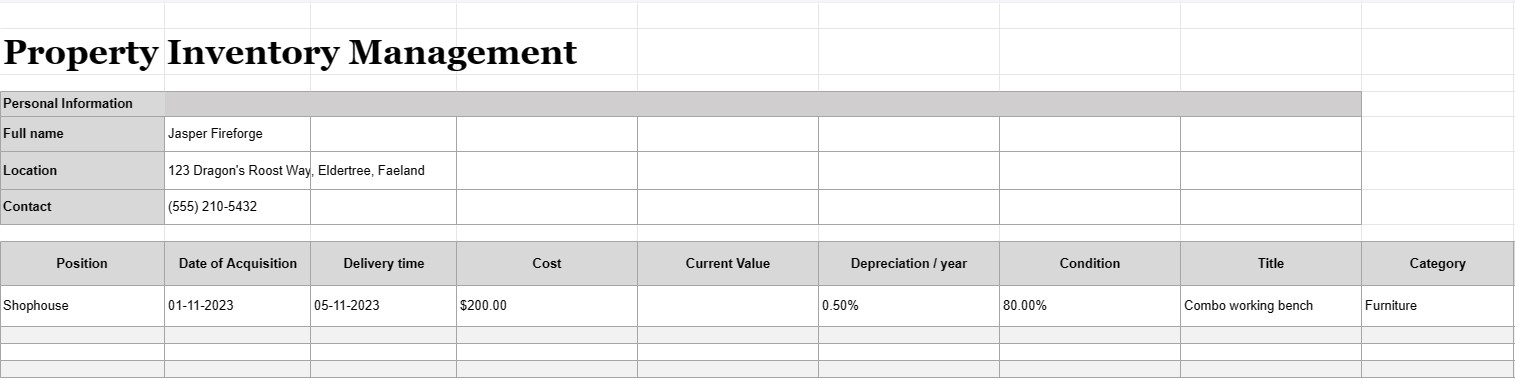
부동산 재고 관리는 개인, 기업 또는 조직이 소유, 사용 또는 관리하는 모든 자산, 장비 또는 품목에 대한 자세하고 체계적인 기록을 유지하는 프로세스입니다. 종종 재고 목록 또는 자산 등록부라고도 하는 자산 재고 관리 문서는 이러한 자산에 대한 정보를 기록하고 추적하는 데 사용되는 문서 또는 데이터베이스입니다. 이 문서는 자산 관리, 재무 추적, 유지 관리 계획, 위험 평가 등 다양한 목적에 중요합니다.
부동산 재고 관리 문서에 일반적으로 포함되는 주요 구성 요소는 다음과 같습니다.
- 자산 설명: 이름, 모델, 일련번호, 제조업체 및 항목을 고유하게 식별하는 기타 관련 세부정보를 포함하여 각 자산에 대한 자세한 설명입니다.
- 자산 카테고리: 자산은 사무용품, 기계, 차량, 가구, 전자제품, 부동산 등 유형에 따라 분류됩니다.
- 자산 위치: 자산이 위치한 구체적인 물리적 위치 또는 부서. 특히 여러 시설을 갖춘 대규모 조직에 중요합니다.
- 획득 날짜: 자산을 획득하거나 구매한 날짜입니다. 이는 연령과 감가상각을 결정하는 데 도움이 됩니다.
- 비용: 세금, 배송비, 설치비를 포함한 자산의 원래 구매 비용 또는 취득 비용입니다.
- 현재 가치: 자산의 현재 추정 가치로, 감가상각이나 절상으로 인해 시간이 지남에 따라 변경될 수 있습니다.
- 조건: 현재 상태 필요한 유지 관리 또는 수리 요구 사항을 포함한 자산.
- 감가상각: 감가상각 방법(예: 정액 또는 정률 잔액) 및 연간 감가상각 비용을 포함한 자산 감가상각에 대한 정보 .
- 보증 정보: 보증 만료 날짜를 포함하여 자산과 관련된 모든 보증 또는 서비스 계약에 대한 세부 정보.
- 사용 내역:
- 스팬> 자산이 얼마나 자주, 집중적으로 사용되는지에 대한 정보로, 유지 관리 일정 및 교체 계획에 도움이 될 수 있습니다.
- 유지 관리 기록: 장비에서 수행된 모든 유지 관리 및 수리 활동에 대한 기록입니다. 날짜, 비용 및 수행된 작업 설명을 포함한 자산.
- 폐기 정보: 판매 가격, 잔존 가치를 포함하여 자산이 처분되거나 폐기된 방법 및 시기에 대한 세부 정보 또는 폐기 비용.
- 바코드 또는 QR 코드: 해당하는 경우 자산에는 재고 관리 시스템의 해당 기록에 연결되는 바코드 또는 QR 코드로 라벨이 지정될 수 있습니다. 품목을 더 쉽게 추적하고 찾을 수 있습니다.
- 책임 당사자: 자산의 관리, 유지 보수 및 관리를 담당하는 개인 또는 부서.
- 보험 정보: 보험 증권 번호 및 보장 세부 사항을 포함하여 자산의 보험 적용 범위에 대한 정보.
- 위험 평가: 다음과 같이 자산과 관련된 잠재적인 위험에 대한 참고 사항 안전 문제 또는 규정 준수 문제.
- 사진: 일련 번호, 자산 태그 및 자산 자체의 사진 또는 스캔을 포함하여 자산의 시각적 문서입니다.
- 사용자 및 위치 기록: 특히 공유 또는 모바일 자산과 관련된 자산 위치 및 사용자의 시간 경과에 따른 변화 기록.
- 감사 추적: A 사용자 이름, 날짜 및 수정 설명을 포함하여 자산 기록에 대한 변경 내역.
부동산 재고 관리 문서는 모든 규모의 기업과 조직에 필수적입니다. 자산은 적절하게 회계처리, 유지관리 및 효율적으로 활용됩니다. 이러한 문서는 정보에 입각한 의사 결정을 촉진하고 자산 보안을 개선하며 재무 및 규정 준수 보고를 지원합니다. 또한 재해 복구 시나리오와 자산 손실 또는 손상 시 보험 청구에 매우 중요합니다.
간편한 미리보기 및 스프레드시트 템플릿 다운로드
제한 없이 스프레드시트 템플릿의 전체 버전을 보고 마음에 드는지 확인한 다음 Excel 템플릿을 다운로드하여 장치에 저장하고 무료로 사용할 수 있습니다.
어디서나 스프레드시트 템플릿에 액세스
이는 Windows, MacOS, Linux, iOS와 같은 널리 사용되는 모든 운영 체제에서 작동합니다. 별도의 프로그램 없이 스프레드시트 템플릿을 확인하고 다운로드할 수 있습니다.
템플릿을 사용하는 방법
따라하기 매우 쉬운 단계에 따라 스프레드시트 템플릿을 미리 보고, 다운로드하고, 사용하는 방법을 알아보세요.
더 유사한 템플릿
선택한 것과 동일한 카테고리에 있는 더 많은 스프레드시트 템플릿을 확인하세요.