5 Why Analysis
범주 : 기획자
The model is using by team to analyze and solve a vast amount of issues, this can be used in multiple scenarios across the industries.
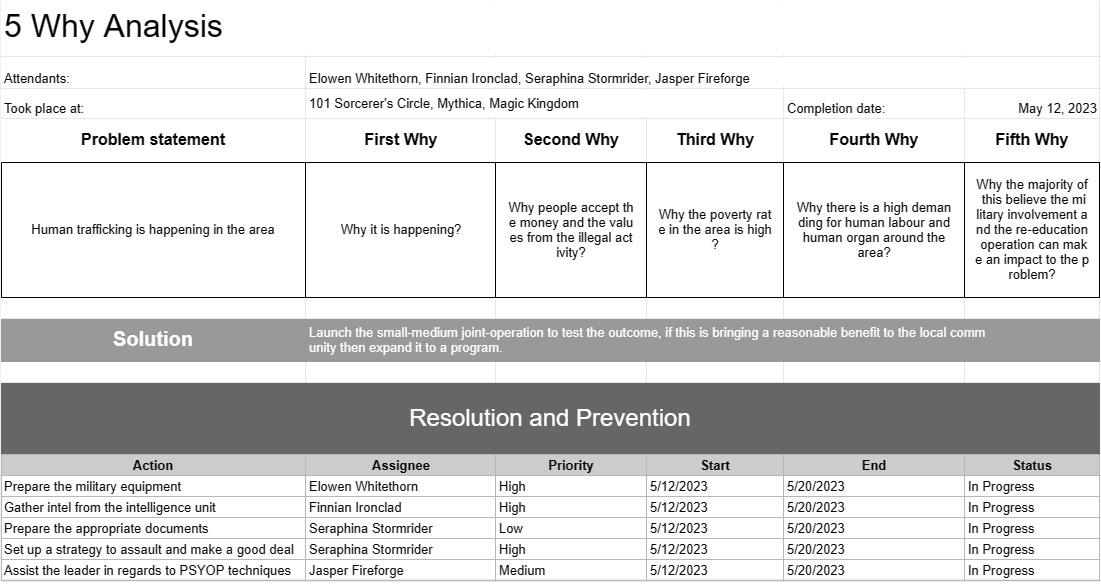
The 5 Why Analysis Template is a structured problem-solving technique that is often used in quality management and continuous improvement processes, such as Six Sigma and Lean methodologies. It is a simple yet powerful tool for identifying the root causes of problems or issues within an organization or a process.
The name "5 Why" reflects the practice of asking "why" repeatedly, typically five times, to delve deeper into the underlying causes of a problem. The goal is to move beyond the immediate or surface-level reasons for an issue and uncover the fundamental factors that contribute to it.
Here's how the 5 Why Analysis process typically works:
- Step 1:Identify the Problem - Begin by clearly defining the problem or issue that needs to be addressed. This should be a specific and observable problem, such as defects in a product, delays in a process, or errors in a service.
- Step 2:Ask "Why" - Ask why the problem occurred and record the answer. This answer becomes the basis for the next "why" question.
- Step 3:Repeat the Process - Continue asking "why" for each answer you receive, typically up to five times or until you reach a point where further questioning doesn't provide meaningful insights. The goal is to trace the problem back to its root cause.
- Step 4:Identify Solutions - Once you have identified the root cause(s), you can develop and implement solutions to address them. These solutions are aimed at preventing the problem from recurring.
Example: Let's say a manufacturing company experiences a high rate of product defects. Using the 5 Why Analysis, they might start with the question, "Why are there defects in our products?"The answers might lead them through a series of "why" questions, ultimately revealing that the root cause is inadequate training for the assembly line workers. The solution would then involve providing proper training and supervision to address this root cause.
The 5 Why Analysis Template is a valuable tool for problem-solving and continuous improvement because it encourages a deeper understanding of issues and helps organizations make more informed decisions to prevent problems from recurring.
If you have further questions about any of the other templates from your list, please feel free to ask, and I'll provide detailed explanations for each of them.
간편한 미리보기 및 스프레드시트 템플릿 다운로드
제한 없이 스프레드시트 템플릿의 전체 버전을 보고 마음에 드는지 확인한 다음 Excel 템플릿을 다운로드하여 장치에 저장하고 무료로 사용할 수 있습니다.
어디서나 스프레드시트 템플릿에 액세스
이는 Windows, MacOS, Linux, iOS와 같은 널리 사용되는 모든 운영 체제에서 작동합니다. 별도의 프로그램 없이 스프레드시트 템플릿을 확인하고 다운로드할 수 있습니다.
템플릿을 사용하는 방법
따라하기 매우 쉬운 단계에 따라 스프레드시트 템플릿을 미리 보고, 다운로드하고, 사용하는 방법을 알아보세요.
더 유사한 템플릿
선택한 것과 동일한 카테고리에 있는 더 많은 스프레드시트 템플릿을 확인하세요.