Ejendomslagerstyring
Kategori : Sporer
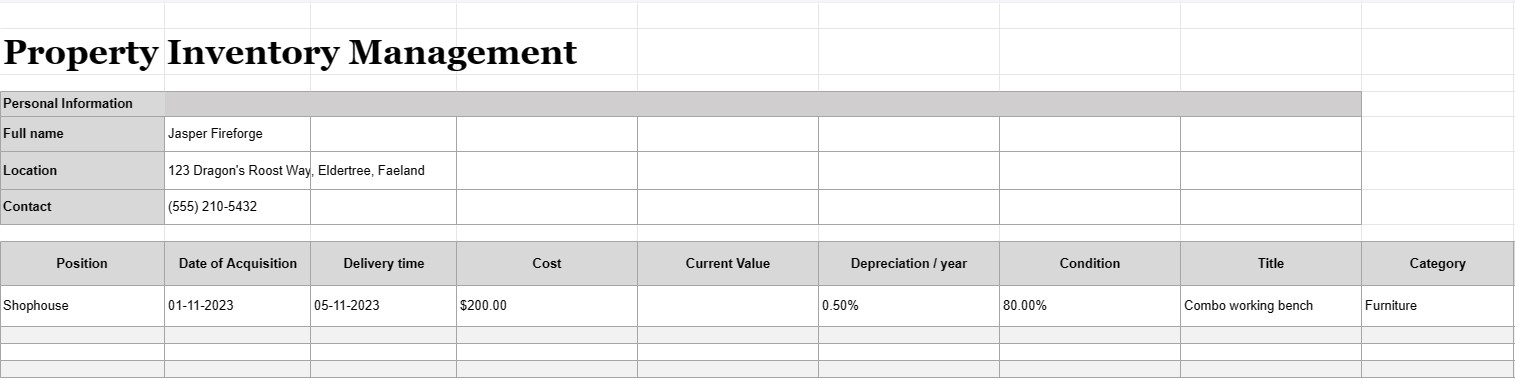
Hav en ejendom og administrer den, og inventarerne indeni er ikke en nem opgave at håndtere, vi mener, at det er meget nemmere at organisere dine objekter ved hjælp af denne excel-skabelon.


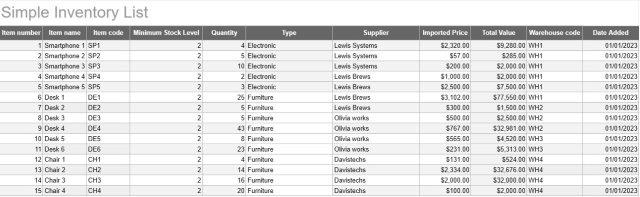
Ejendomslagerstyring er processen med at føre en detaljeret og organiseret fortegnelse over alle aktiver, udstyr eller genstande, der ejes, bruges eller administreres af en enkeltperson, virksomhed eller organisation. Et dokument til styring af ejendomsbeholdning, ofte omtalt som en inventarliste eller et aktivregister, er et dokument eller en database, der bruges til at registrere og spore oplysninger om disse aktiver. Dette dokument er afgørende for forskellige formål, herunder aktivstyring, økonomisk sporing, vedligeholdelsesplanlægning og risikovurdering.
Her er de vigtigste komponenter, der typisk indgår i et dokument til styring af ejendomsbeholdning:
- Aktivbeskrivelse: En detaljeret beskrivelse af hvert aktiv, herunder dets navn, model, serienummer, producent og alle andre relevante detaljer, der entydigt identificerer varen.
- Aktivkategori: Aktiver kategoriseres baseret på deres type, såsom kontorudstyr, maskiner, køretøjer, møbler, elektronik eller fast ejendom.
- Aktivets placering: Den specifikke fysiske placering eller afdeling, hvor aktivet er placeret, især vigtigt for større organisationer med flere faciliteter.
- Dato for erhvervelse: Datoen, hvor aktivet blev erhvervet eller købt. Dette hjælper med at bestemme dets alder og afskrivning.
- Omkostninger: Den oprindelige købspris eller anskaffelsessum for aktivet, inklusive skatter, forsendelse og installationsgebyrer.
- Nuværende værdi: Aktivets aktuelle anslåede værdi, som kan ændre sig over tid på grund af værdiforringelse eller værdistigning.
- Tilstand: Den nuværende tilstand af aktivet, inklusive eventuelle nødvendige vedligeholdelses- eller reparationsbehov.
- Afskrivning: Oplysninger om aktivets afskrivning, herunder afskrivningsmetode (f.eks. lineær eller faldende saldo) og årlige afskrivningsomkostninger .
- Garantioplysninger: Detaljer om eventuelle garantier eller serviceaftaler forbundet med aktivet, inklusive garantiens udløbsdatoer.
- Brugshistorik: Oplysninger om, hvor hyppigt og intensivt aktivet bruges, hvilket kan hjælpe med vedligeholdelsesplanlægning og udskiftningsplanlægning.
- Vedligeholdelsesjournaler: Registrerer alle vedligeholdelses- og reparationsaktiviteter, der udføres på aktiv, herunder datoer, omkostninger og beskrivelser af det udførte arbejde.
- Oplysninger om bortskaffelse: Detaljer om, hvordan og hvornår aktivet blev afhændet eller trukket tilbage, inklusive salgspris, bjærgningsværdi , eller bortskaffelsesomkostninger.
- Stregkode eller QR-kode: Hvis det er relevant, kan aktiver mærkes med stregkoder eller QR-koder, der linker til deres respektive poster i lagerstyringssystemet, hvilket gør det nemmere at spore og lokalisere genstande.
- Ansvarlig part: Den person eller afdeling, der er ansvarlig for aktivets pleje, vedligeholdelse og forvaltning.
- Forsikring Information: Oplysninger om forsikringsdækning for aktivet, herunder policenumre og dækningsdetaljer.
- Risikovurdering: Noter om eventuelle potentielle risici forbundet med aktivet, som f.eks. sikkerhedsproblemer eller overholdelsesproblemer.
- Fotografier: Visuel dokumentation af aktivet, herunder fotos eller scanninger af serienumre, aktivmærker og selve aktivet.
- Bruger- og placeringshistorik: Registreringer af ændringer i aktivets placering og brugere over tid, især relevante for delte eller mobile aktiver.
- Revisionsspor: A historik over ændringer, der er foretaget i aktivregistreringerne, herunder brugernavne, datoer og beskrivelser af ændringer.
Dokumenter til styring af ejendomsbeholdning er afgørende for virksomheder og organisationer af alle størrelser, da de hjælper med at sikre, at aktiver er korrekt bogført, vedligeholdt og udnyttet effektivt. Disse dokumenter letter informeret beslutningstagning, forbedrer aktivsikkerheden og understøtter finansiel og overholdelsesrapportering. Derudover er de afgørende i scenarier for genopretning efter katastrofe og for forsikringskrav i tilfælde af tab eller skade på aktiver.
Nem forhåndsvisning og download regnearkskabelon
Se den fulde version af en regnearksskabelon uden begrænsninger for at se, om du kan lide den, så kan du downloade excel-skabelonen for at gemme den på din enhed og bruge den gratis.
Få adgang til regnearksskabelon fra hvor som helst
Dette fungerer på alle populære operativsystemer såsom Windows, MacOS, Linux, iOS. Du kan se regnearksskabelonerne og downloade dem uden yderligere programmer.
Sådan bruger du en skabelon
Find ud af, hvordan du kan forhåndsvise, downloade og derefter bruge regnearksskabelonen ved at følge trinene, som er ekstremt nemme at følge
Flere lignende skabeloner
Se flere af regnearksskabelonerne, som er under samme kategori med den valgte.